How to keep storytime fun for young children
You know the moment: you sit down with a beautiful picture book, excited to create a magical storytime. But after just a few pages, the magic seems to disappear. Your child starts wiggling, looking around, or talking about something completely different. Or maybe it’s the other way around: your child wants to hear the same book for the hundredth time, and your own enthusiasm starts to fade.
If this sounds familiar, you’re not alone. Studies show that the average attention span for storytime with 2- to 3-year-olds is around 22 minutes, but the quality of those minutes depends on how we read together.
At Mr Tales, we know that reading aloud isn’t just a box to check—it’s a conversation you share. In this guide, we’ll go beyond the usual tips. We’ll explore the psychology behind your child’s attention and share practical ways to bring every story—old or new—back to life.
From reading aloud to sharing an experience: The psychology of attention
Why do kids lose interest? We often think the story is too hard or too boring. But usually, it’s just that the style doesn’t match their energy in that moment.
The secret is what experts call Dialogic Reading—a research-backed approach where your child becomes an active storyteller, not just a passive listener. Studies show that kids who experience this interactive style not only build bigger vocabularies, but also focus and concentrate better.
So, the goal isn’t to read a story perfectly, but to use the book as a playground for interaction.
The 3 levels of storytime magic
To keep your child’s attention, try switching between three levels of engagement. If you notice their focus slipping, move up a level!
Level 1: Your voice as an instrument
This is the foundation. You don’t have to be a professional voice actor, but varying your tone and pace works wonders. Whisper when it’s suspenseful, speed up during a chase, and slow down when the character is tired.
- Pro tip: Give each character a unique trait. Maybe the bear always speaks low and slow, while the mouse is quick and high-pitched. This helps kids follow the story without you always having to say “the bear said.”
Level 2: The PEER method (Interaction)
Now you move from telling to asking. The PEER method is a golden tool for interaction:
1. Prompt: Invite a response. ("What do you see behind the tree?")
2. Evaluate: Acknowledge their answer. ("Yes, that’s a squirrel!")
3. Expand: Add to their answer. ("A squirrel with a big, bushy tail.")
4. Repeat: Have your child repeat the new idea. ("Can you say ‘bushy tail’ too?")
Level 3: The creative director
This is where the real magic happens—and something we love at Mr Tales: don’t be afraid to go off-script. Use the book as a starting point, not the finish line.
- Change the names: Swap the main character’s name for your child’s. Suddenly, the story is about them.
- Invent a new ending: “What if the wolf wasn’t angry, just really hungry?”
- Use props: A simple sock becomes a puppet, or a flashlight makes the story exciting in a dark room.
The ‘Energy-Match’ strategy: Which story fits when?
A common mistake is reading on autopilot, no matter your child’s mood. By matching your reading style to their energy (the “Energy-Match”), you can avoid resistance.
Situation A: The ‘Bouncing Ball’ child (High energy)
Your child has too much energy to sit still. Forcing them rarely works.
- The strategy: Active reading.
- How? Let your child act out the story. “The frog jumps—can you jump like a frog?” Or turn the book into a search game: “Can you find the three red balloons before I turn the page?” Make storytime a game.
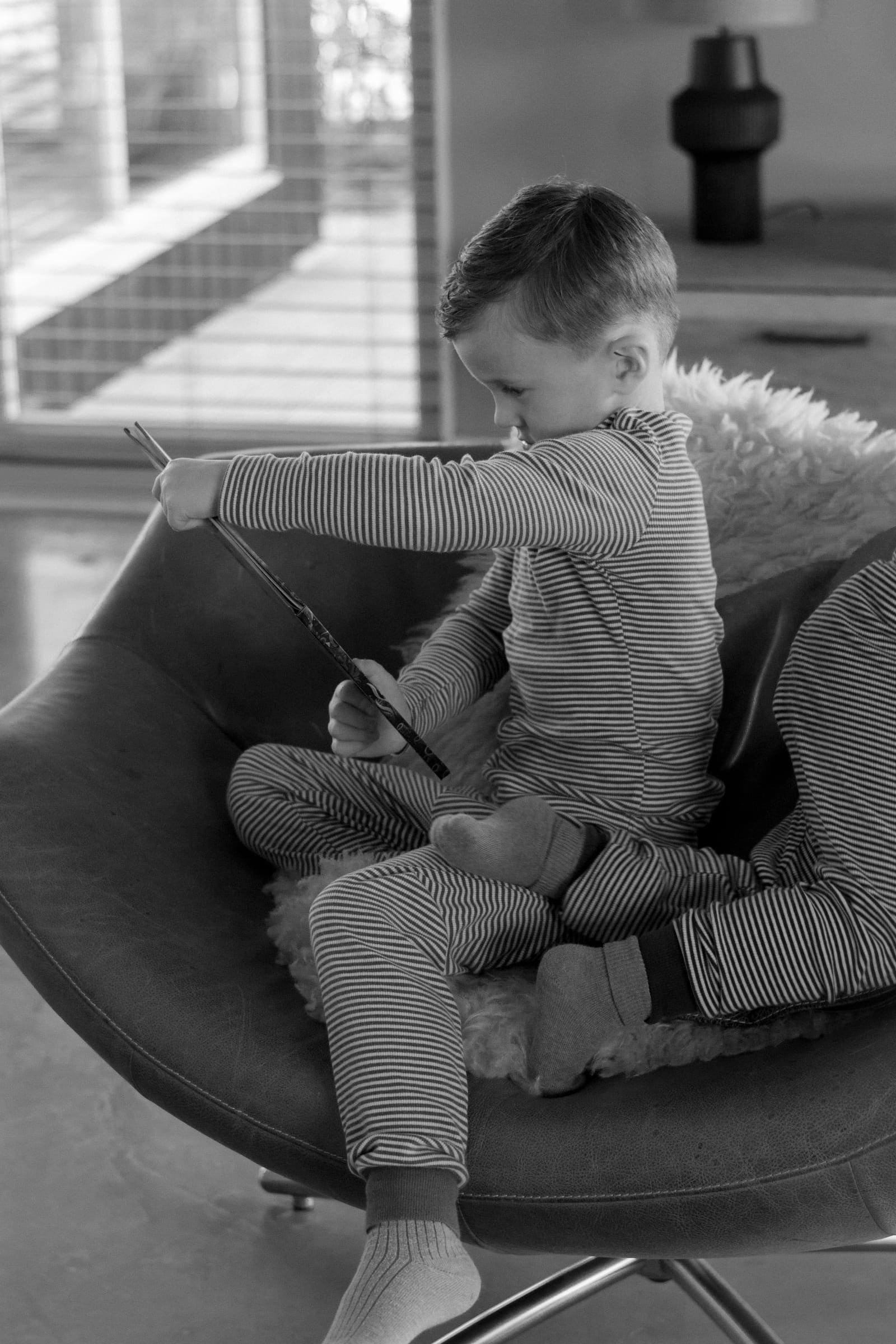
Situation B: The ‘Tired but Happy’ child (Low energy)
It’s bedtime, their eyes are drooping, but they still want a story.
- The strategy: Rhythm and repetition.
- How? Choose stories with rhymes or predictable lines. The rhythm of your voice is soothing. This isn’t the time for wild voices, but for a calm, steady tone that helps them drift to sleep.
Situation C: The ‘I’m Bored’ child (Medium energy)
Your child is distracted and uninterested in the usual books.
- The strategy: Personalization and curiosity.
- How? Spark their imagination with something unique. Ask: “If you were writing this book, which animal would show up next?”
Why making your own book is the ultimate tip
Sometimes, the best way to inspire a love of stories is to flip the roles. Instead of being a listener, your child becomes the creator.
At Mr Tales, we see every day what happens when kids (and parents) take the lead. When a child helps create the story—from picking the characters to choosing the adventure—their engagement skyrockets.
Making a book together solves many traditional “storytime problems”:
- No attention issues: It’s about their own ideas.
- No boredom: The story fits their world right now.
- Pride: Holding a real book they “made” gives a huge confidence boost.
Thanks to modern tools, this is easier than ever. With AI support, you and your child can come up with sentences and create illustrations—no need to be a writer or artist. The result is a one-of-a-kind story you’ll want to read again and again.
Frequently asked questions about storytime challenges (Troubleshooting)
Maybe you’re facing some specific hurdles. Here are answers to the most common questions we hear from parents and creators.
My child wants to hear the exact same book every night. Should I allow this?
Absolutely. Even if it feels repetitive to you (“Not The Very Hungry Caterpillar again!”), repetition is crucial for kids. Psychologists say it gives them a sense of safety and control—they know what’s coming, and that feels good. Plus, they learn new words every time.
Tip: Want some variety? Agree: “First we’ll read your favorite book, then we’ll read two pages from a new one.”
I’m too tired to make storytime exciting. What now?
Be kind to yourself. You don’t have to put on a show every night. On tired days, try a “Picture Walk.” Instead of reading the text, just flip through the pages together and talk about the pictures. “Hey, what’s that dog doing?” This takes less energy but is just as valuable for language development.
My child walks away during reading. Should I stop?
Not right away. Many young children actually listen better while moving. Keep reading calmly. Often, you’ll see them playing with blocks but still listening. You can involve them by asking, “Can you build the tower from the book with your blocks?” This connects their play to your story.
The next chapter in your story
Keeping storytime fun isn’t an exact science—it’s an adventure you share. Whether you try dialogic reading, match your energy to your child’s, or create your own unique book together, the most important thing is the connection you build.
The best stories are the ones that resonate with who your child is. Sometimes you’ll find them at the library, and sometimes they’re already in your heads, waiting to be created together. Remember: there’s no “wrong” way to read aloud, as long as you’re both enjoying it.