How to write scenes kids can feel: show, don’t just tell
The sentence "Lisa was scared" tells us how she feels, but it doesn’t make the reader feel anything. In a personalized children's book, show don’t tell is all about action—let your character do something with their fear. That’s how you write scenes kids can really experience, without slowing down your story.
It’s Sunday night. The house is quiet, you’re sitting at the kitchen table with a steaming mug of tea, and your latest scene is on the screen. You want your main character to go through something exciting, so you type: "Lisa was scared."
You read it back and something feels off. The sentence is flat, almost clinical. You know the writing rule: show, don’t tell. But how do you use that in a children’s story without losing momentum? Kids don’t have patience for pages of slow description—they want action.
Why long descriptions don’t work for kids
Many writers think showing means describing every ripple in the water. In adult fiction, that can set a mood. In a children's book, it’s the quickest way to lose your young reader. Spend half a page on shadows on the wall and the sound of the wind, and your reader is gone before Lisa even does anything.
The solution isn’t more description—it’s action.
Kids read with their whole bodies
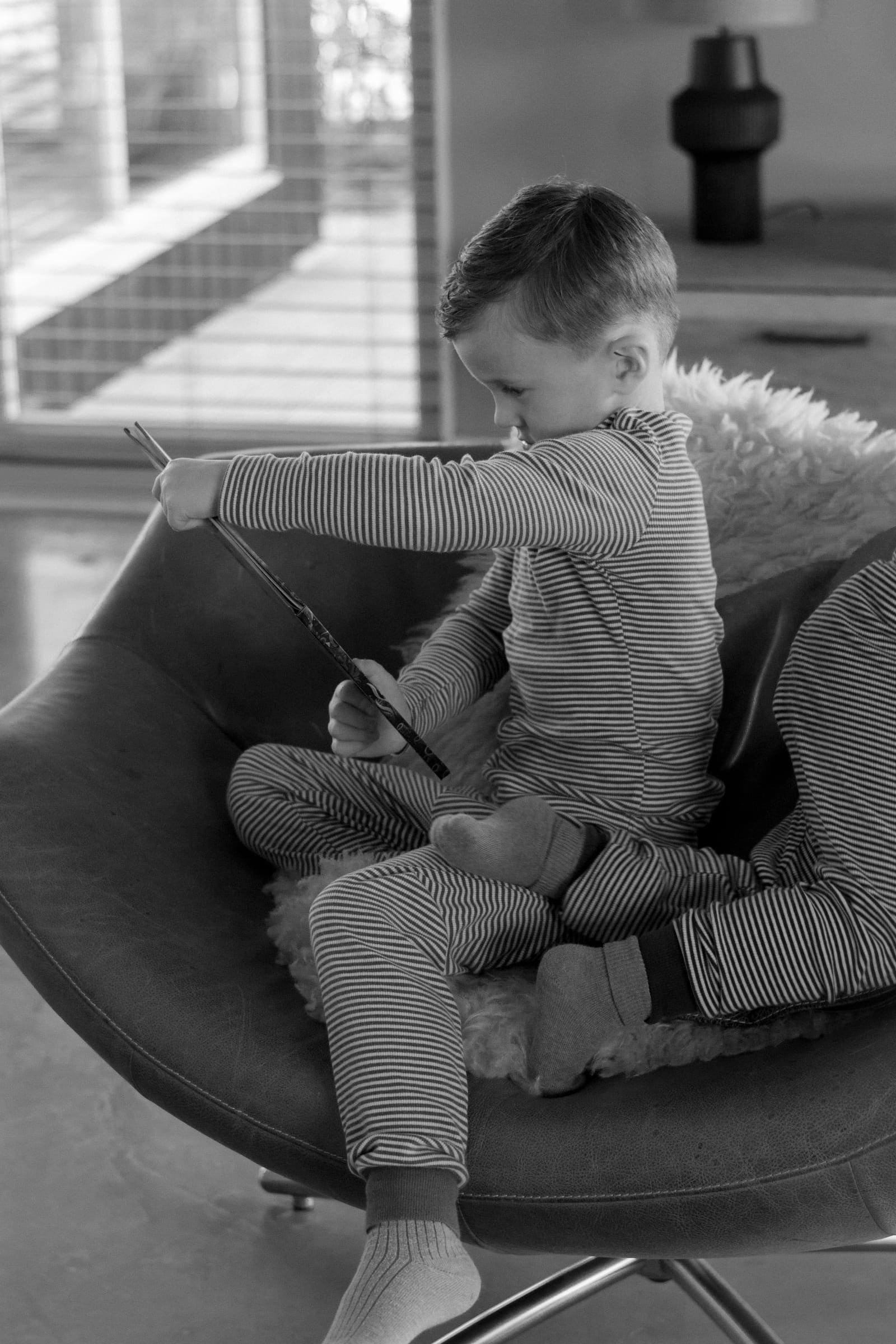
Abstract emotions like fear or sadness can be hard for young kids to grasp. But a physical reaction to those feelings? That’s instinctive: hiding, running away, squeezing something tight. Kids experience a story through the character’s actions. As children’s author Annet Huizing explains in her writing guide "How I Accidentally Wrote a Book," it’s everyday actions that make a character’s inner world real.
Want a child to feel Lisa’s fear? Let Lisa move.
Turning a flat sentence into a living scene
Translating emotion into action can be tricky, especially when you’re in the flow of writing. The Mr Tales writing tool helps you bridge that gap. Type your basic sentence, select it, and choose a direction—like fear plus hiding. The tool looks at your story’s context and suggests an alternative:
Lisa grabbed her bunny by one ear and crawled under the covers until all she could see was the ceiling of her castle.
No one says Lisa is scared. You see it in what she does: clutching her stuffed animal, hiding under the blankets, turning her bed into a castle. The pace stays up, because action drives the scene forward. You stay in control of your story; the tool is your brainstorming partner, as we explain in AI as your brainstorming partner, you as the author.
Your own cheat sheet: telling vs. showing
Telling | Showing |
Danny was angry. | Danny slammed his crayons down on the table. The red tip snapped with a crack. |
Mom was tired. | Mom rested her head on the kitchen table, right on the damp ring from her coffee cup. |
Sophie felt lonely. | Sophie traced circles in the dust on the windowsill and watched the cars outside. |
Lars was excited. | Lars bounced from his left foot to his right, struggling to zip up his jacket. |
When telling is okay
You don’t have to show everything. Transitions like "the next morning at school" or "after three hours of driving, they arrived" are fine to tell—those keep the story moving. Save showing for the key moments: when tension rises, when a character changes, or during the climax of a scene. You’ll find more tips like this in our practical guide to making your story stronger.
Frequently asked questions
Isn’t show don’t tell too hard for young readers?
It’s actually the opposite. Young kids understand physical actions much faster than abstract emotion words. "Frustrated" is something they still have to learn, but a character crossing their arms and hiding behind a curtain makes sense right away.
Won’t my book get much longer?
Only if you slip into passive descriptions of the setting. If you swap a told emotion for an action, your story stays about the same length—just with more impact.
Bring your story to life
Have a manuscript waiting that still feels a bit flat? Go through your scenes and, for each key moment, find one action that shows the emotion. With the Mr Tales writing tool, you can make those changes faster. Ready to take the next step and publish? Check out how to become an author with Mr Tales.