How to write about tough emotions in a children's book without making it heavy
Writing about loss, fear, or anger for children doesn’t have to make a story feel heavy. At Mr Tales, we use animals or fantasy worlds to create distance, make emotions tangible, break tension with humor, and always end on a note of hope. That’s how we craft custom storybooks that comfort and stick with young readers.
If you’ve ever tried to write a children’s book, you know the feeling: you have a meaningful idea—maybe about loss, the uncertainty of moving, or the anger of a child who doesn’t feel heard. But as soon as you start writing, doubt creeps in. Is this too much? Will it scare young readers away?
Writing about big emotions for little ones is both rewarding and tricky. Publishers often turn down manuscripts on tough topics—not because of the subject itself, but because the story lacks lightness, resilience, or a sense of agency. The need for these stories, though, is bigger than ever. Parents, teachers, and librarians are looking for books that help kids grow emotionally and socially.
The paradox of writing about tough topics
Kids are emotionally perceptive. They pick up on what’s happening at home or in class, even when adults don’t talk about it. A good children’s book acts as a safe mirror, giving words to feelings a child already senses but can’t yet name.
Social-Emotional Learning (SEL) is a growing focus in education. Studies show that targeted SEL activities, like bibliotherapy, can help young kids gain months of extra learning—helping them understand and manage their emotions.
This has shifted trends in children’s books:
- The old trend. Books that are just about the emotion itself, like sorting feelings into jars. They’re helpful, but sometimes lack a real story.
- The new trend. Stories with SEL woven in—engaging plots where emotions are a natural part of the character’s journey.
As a creator, you want kids to feel the emotion without feeling like they’re reading a lesson plan. That’s why stories written from personal motivation often resonate most—they connect directly with a child’s world.
Building a safe buffer with emotional distance
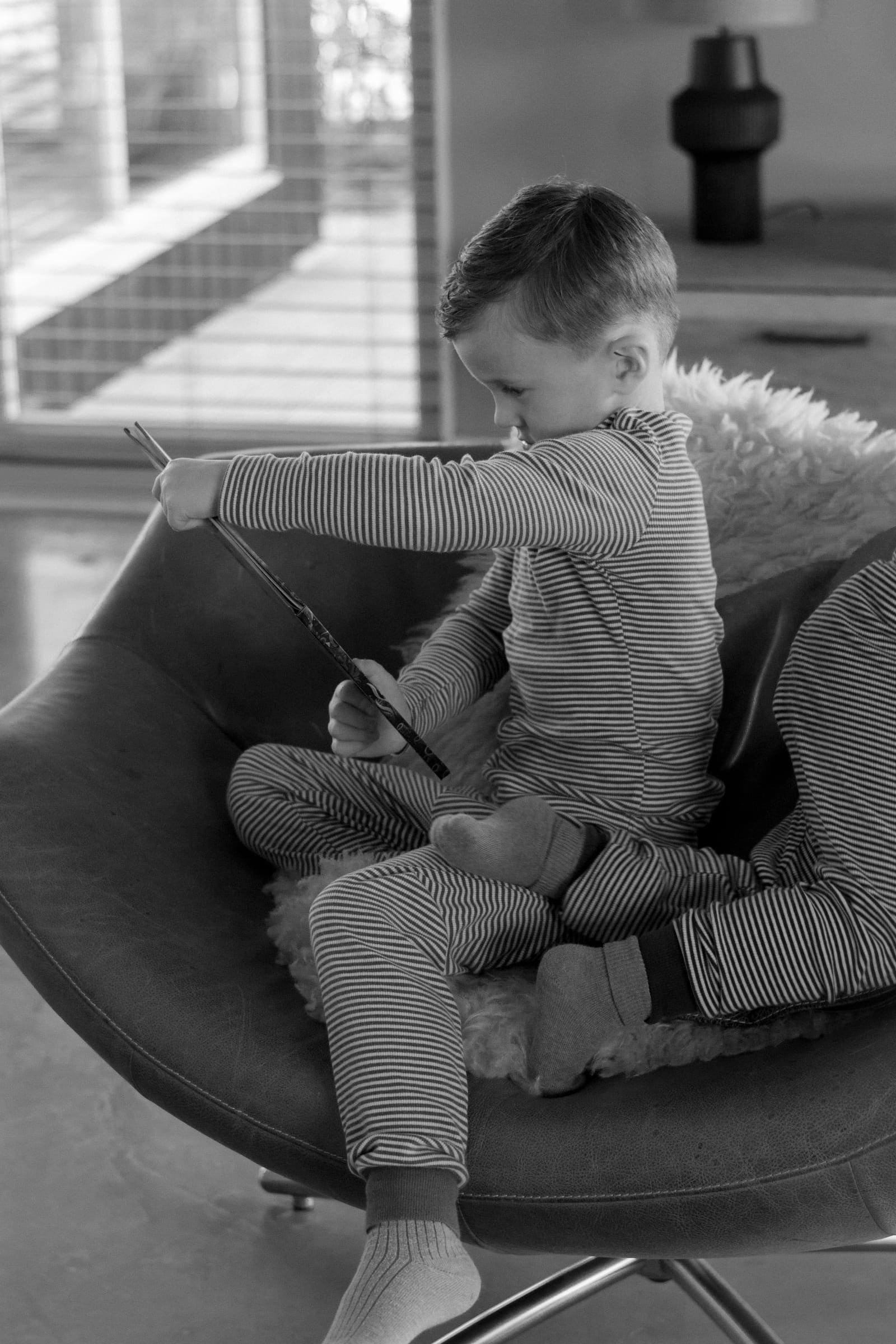
Kids can be emotionally invested in your story without being overwhelmed. The key is a classic literary and psychological concept: emotional (or aesthetic) distance.
This buffer lets kids explore emotions safely. Here are three proven ways to create it:
Anthropomorphism (animals with human traits)
If a seven-year-old character’s parents are divorcing, that can hit too close to home for a child in the same situation. But if the main character is a squirrel whose parents move to separate trees, the situation is relatable but not threatening. The squirrel carries the weight; the child observes safely.
Fantasy or historical settings
Setting your story in a magical forest, on a distant planet, or in a castle softens the edges of real-life struggles. A child stressed about school can relate to a young wizard whose first spells keep going wrong.
The objective narrator
Shifting your storytelling perspective helps too. A first-person narrator (“I felt cold panic in my throat”) is more intense than a gentle, all-knowing narrator (“Little Bear looked at the tall waves and felt his paws tremble a bit”).
We see the strongest stories on the Mr Tales platform use these buffers to help kids learn tough life lessons.
Why a heavy suitcase works better than just saying "sadness"
Kids think in pictures. Abstract words like "depression," "grief," or "fear of failure" are hard for them to grasp. To make these emotions real and discussable, use strong, physical metaphors.
A metaphor gives emotion shape, weight, and texture. Here’s how:
- Sadness as an uninvited guest. Instead of saying a character is sad, make sadness a big, furry, blue giant who suddenly sits on the couch. He doesn’t talk much, takes up space, and slows everything down. Kids learn that sadness comes and goes—it doesn’t stay forever.
- Uncertainty as a whispering shadow. Turn uncertainty into a small, gray creature that sits on the character’s shoulder and whispers doubts (“Are you sure you want to do that?”). The journey isn’t to destroy it, but to learn to ignore it—or give it a cookie so it’s quiet for a while.
- Jealousy as green glasses. Describe jealousy as glasses the character puts on, making everything look sour, green, and unfair. When they take the glasses off, they see others’ worlds aren’t perfect either.
With vivid metaphors, parents and teachers can ask, “Do you ever carry a heavy suitcase like that?” or “Is the blue giant sitting on your couch today?”
Let kids feel emotions in the character’s body
One of the best writing rules is show, don’t tell. In children’s books, this is even more important. Don’t just say how a character feels—show it through physical reactions and actions. Kids feel emotions in their bodies: their stomach hurts when they’re nervous, their cheeks get hot when they’re angry.
Here’s how to turn abstract feelings into concrete actions:
- Anger: Show it as warmth, muscle tension, or quick breathing. Instead of “he was angry,” write: “His fists felt like two hot, heavy stones in his pockets. His breath huffed like a little bull.”
- Sadness: Sadness can feel like a lump in the throat or heavy shoes. Write: “A cold, wet frog sat in her throat, jumping whenever she tried to talk. Her shoes suddenly felt like they were made of lead.”
- Fear and uncertainty: These show up as butterflies in the stomach, cold hands, or trembling. Write: “Her belly felt like a swarm of wild butterflies looking for the exit. She pulled her sleeves over her cold fingers.”
- Jealousy: Jealousy can feel like a churning stomach or a narrowed view. Write: “A little green monster gnawed inside his ribs. Every time his brother got applause, the monster took a bite.”
Bringing back lightness with laughter
When writing about tough topics, humor is your best friend. Think of it as the pressure valve on a cooker: it lets tension out so the story stays digestible. The contrast between tears and laughter often makes the emotional impact even stronger.
Three ways to use humor respectfully:
- The comic sidekick. Give your main character a pet or friend who sees the world differently. While the main character struggles, the dog chases a fly and falls off the chair.
- Absurd moments. Let characters do something silly in their sadness or anger. A dad so sad he pours salt into the hot chocolate by mistake—and they decide salty cocoa might be a new invention.
- Wordplay. Kids love funny mispronunciations, silly words, or running jokes. These give a break during reading and help the brain relax before the next emotional scene.
Your story doesn’t need a happy ending, but it does need hope
There’s a golden rule in children’s books: the ending must be hopeful.
As adults, we know some problems don’t just go away. A grandparent who’s passed won’t return. A divorce can’t be undone. A chronic illness doesn’t disappear. You don’t need to promise kids a perfect ending—they sense when an ending is too good to be true, and that can feel lonely.
Instead, offer a hopeful ending with a clear way forward. Show that the main character has found ways to cope:
- The problem is still there, but manageable. Grandpa is still gone, but the character has learned to bake his favorite apple pie. When it’s in the oven, the whole house smells like Grandpa, and that feels warm instead of cold.
- The character has grown. The move happened and the old school is missed, but today the main character played in the mud with a new neighbor for the first time. The world just got a little bigger.
- There’s connection. The anger isn’t gone, but there’s now a rule: when the volcano in your head erupts, you can drum instead of slam doors. There’s understanding now.
Hope is the thread that makes a book comforting instead of sad. The young reader is left with reassurance: things are tough now, but I can handle it.
The lightness checklist for your story
Not sure if your manuscript balances emotional depth and lightness? Use this checklist:
Is there enough emotional distance?
Have you considered using an animal or fantasy character instead of a realistic child to create a safe buffer?
Do you show emotions physically?
Have you swapped out words like “sad,” “angry,” or “scared” for physical reactions, like a lump in the throat or stones in a pocket?
Is your main character active?
Does the character take small steps to cope, or just passively experience the emotion?
Is there a pressure release?
Is there at least one scene where humor or a light moment breaks the tension?
Is your metaphor consistent?
If you use a metaphor, like sadness as a gray cloud, does that image stay logical throughout the story?
Does the ending offer hope?
Is there a clear way forward for the character, even if the main problem isn’t fully solved?
From manuscript to a real book on your shelf
Writing a story with emotional depth takes courage, empathy, and care. Maybe you’re still unsure about some scenes, or you’re looking for just the right illustrations to support the emotion.
These days, you don’t have to wait for a traditional publisher to share your book. With modern creative tools, you control the whole process. AI can help you brainstorm metaphors or organize chapters, but remember: only you bring real empathy and ethical choices. Keep those boundaries in mind—computers can’t feel, but you can.
When your story is ready, the Mr Tales platform helps you turn your manuscript into a professionally printed book. Whether you’re making a book for your own kids, for your classroom, or dreaming of a spot on the shelves of thousands of families, we have the tools to bring your idea to life. Don’t worry about distribution—we’ll help you take your first steps, like finding your first readers.
Frequently asked questions about tough topics in children’s books
At what age can you introduce tough topics in a book?
At any age, as long as the approach fits the child’s development. For toddlers and preschoolers, use simple, sensory metaphors (warm or cold, near or far) and strong images. The older the child, the more complex the characters’ inner world can be.
How do I know if my story is too traumatic or scary?
The best test is your main character’s reaction. If they stay scared without comfort, support, or a safe place, it’s likely too much for the reader. Always include a warm, supportive character—a parent, wise tree, or loyal dog—who brings safety.
Do all characters in these books have to be animals?
No, but animals help create distance. If you choose human characters, make sure they’re just different enough from the reader—maybe set in another time or with a unique look—so it doesn’t feel like it’s literally about the child.
How do schools and teachers respond to these kinds of books?
Teachers are often your biggest fans. They deal with group dynamics, bullying, loss, or fear every day. A good children’s book that naturally addresses these themes and offers ways to talk about them is a valuable tool.
Your story deserves to be read
Tough emotions are part of life, even for kids. By writing about them in a warm, light, and hopeful way, you give young readers a precious gift: the understanding that they’re not alone in their feelings, and that after every storm, there’s a new ray of light.
Do you have a story in your head that could make a child’s world a little brighter, safer, or easier to understand? Start today. Set your doubts aside and build that book. You can get started right away and make a children’s book with us, where we guide you step by step from first idea to a real, printed book you can be proud of.