How to write an exciting plot twist in a children's story—without making it too scary
A great plot twist keeps your child excited for what happens next—not hiding under the covers. In this post, we’ll show you how to add a surprising turn to your custom children’s story that’s just right for your child’s age, with practical techniques and a kid-friendly checklist.
Picture this: You’re sitting on the edge of your child’s bed. The room is dim and cozy as you make up a bedtime story. You introduce a brave little squirrel searching for a golden acorn. After a few lines, you realize the story is falling flat: "He walked on, found a nut, and went to sleep." Your child’s attention starts to wander.
To shake things up, you throw in an exciting twist: "Suddenly, a big, hungry wolf with sharp teeth jumped out from the bushes!" Your child’s eyes go wide, their lip starts to quiver, and the cozy mood turns to panic. Looks like it’ll be a long night with the lights on.
Writing a suspenseful plot twist is a balancing act. You want your story to be engaging and surprising, but you don’t want your child to feel scared. So how do you, as a beginner storyteller, get the right amount of excitement?
Why young kids experience suspense differently
To find the line between excitement and fear, it helps to understand how young children think. Kids ages 4 to 6 are in what psychologists call the "magical phase"—they can’t always tell the difference between fantasy and reality. For them, a wolf in a story can feel very real in their bedroom.
Around ages 7 or 8, children start to understand fiction versus reality better. They can handle more concrete problems and active threats, as long as the main character stays in control.
Age | What works (exciting, safe) | What’s too much | The ideal plot twist |
4 to 6 years | Unknown sounds, gentle mysteries, funny misunderstandings, false threats | Direct physical danger, mean monsters with no reason, losing their sense of safety | The scary shadow turns out to be a funny object or a friendly animal |
7 to 8 years | Solving a puzzle, overcoming a small argument, losing something and searching for it | Violence, irreversible bad events, unbeatable villains | The main character uses a clever plan to outsmart a bully |
Three ways to create a safe plot twist
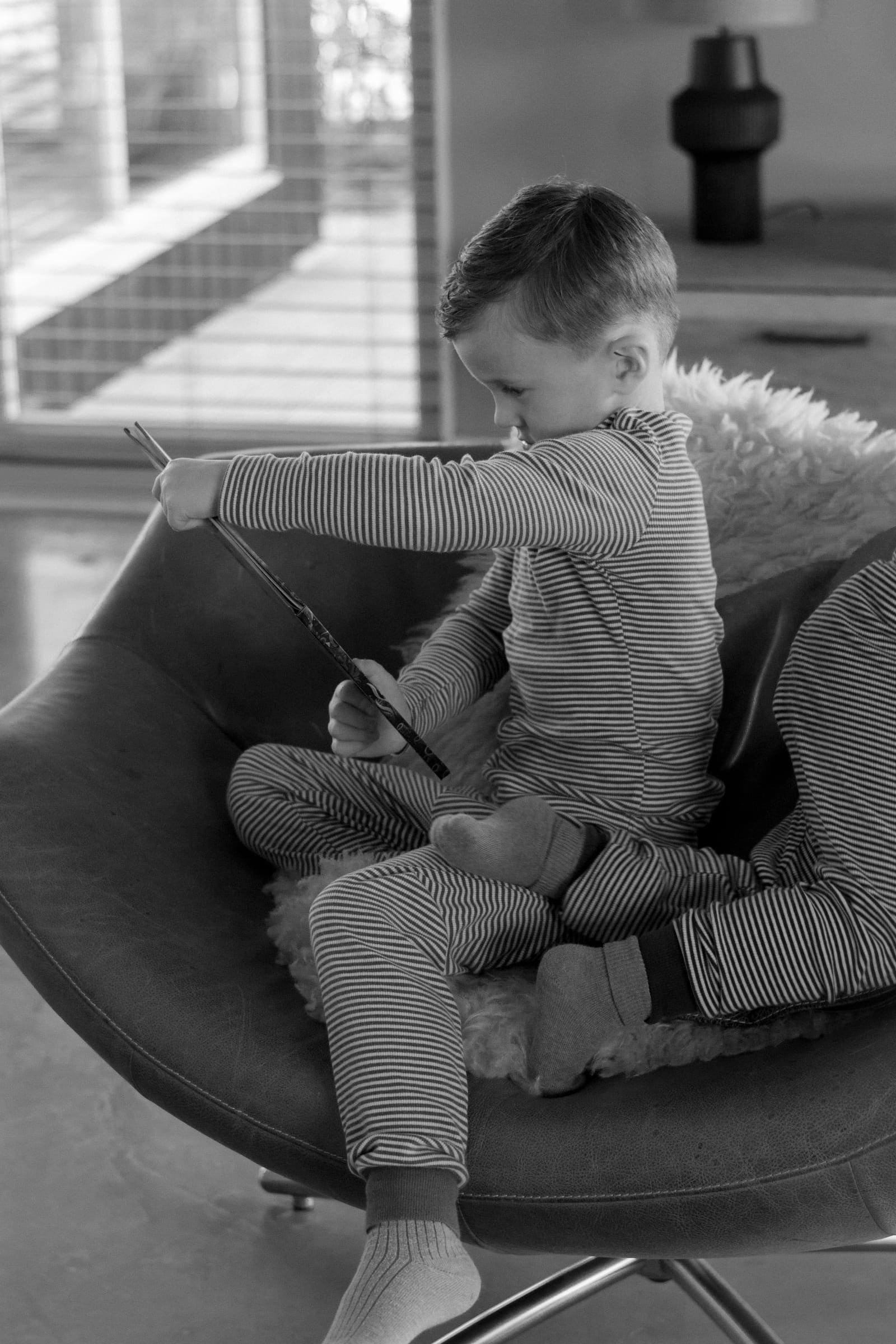
A plot twist is the moment when everything changes and your main character has to act. Here are some ways to introduce a twist without making things too intense.
The false alarm
This is perfect for younger kids. Build up a little suspense by focusing on the senses, then quickly reveal a harmless or funny explanation. Your character hears a scratching noise behind the curtain. The curtain opens—it's just the chubby house cat playing with a ball of yarn.
The clever—not just strong—hero
Let your main character solve the problem creatively instead of fighting or running away. This shifts the focus from fear to curiosity about the solution. An explorer faces a gate guarded by a grumpy troll. Instead of fighting, she asks the troll to play tic-tac-toe. The troll is just bored and lets her pass with a laugh.
Adding humor to break the tension
Humor can soften a suspenseful moment. The angry witch tries to cast a terrible spell, but sneezes so hard that her wand shoots out a cloud of pink rubber duckies.
How Mr Tales' writing tool helps you find the right balance
Coming up with a creative, safe plot twist can be tough—especially when you’re staring at a blank page. The Mr Tales writing tool helps you keep things balanced. For example, if you type: "Sam the little dragon is lost in the dark forest and comes face to face with a huge, fire-breathing dragon who looks angry," the tool recognizes that this might be too intense for a preschooler. Instead, it suggests a lighter twist: the big dragon looks wild because he’s lost his fire-breathing powers and is trying to make pancakes with a hair dryer.
With just one suggestion, your story keeps moving, there’s a clear conflict, and any trace of real fear is gone.
Checklist for a kid-friendly plot twist
- Is the threat familiar, not anonymous? An animal with a name and a clear goal is less scary than an unknown monster.
- Does the suspense end within two pages?
- Is there room for humor or relief?
- Does the main character stay in control, instead of being a helpless victim?
- Does the main character return to safety at the end?
Frequently asked questions about suspense in children’s stories
My child likes a little scare—can I make it more exciting?
Absolutely. Every child is different: some preschoolers love a gentle thrill, while others get spooked easily. With the Mr Tales writing tool, you can adjust the tone to fit your own child.
Will the story be boring if everything turns out fine right away?
No. Suspense comes from caring about the character, not from how big the danger is. A squirrel who loses his favorite stuffed animal before bed can be just as suspenseful for a four-year-old as a treasure hunt is for an eight-year-old.
Will the story still work for older kids?
You can select the age group you want, and the writing assistant will adjust the complexity of plot twists, vocabulary, and suspense. For an eight-year-old, suggestions focus more on logical thinking or a real challenge, rather than the simple false alarm that works for preschoolers.
Start writing your own adventure today
Writing your own children’s story is one of the most personal gifts you can give. Do you already have an idea for a brave explorer, a stubborn little animal, or a dragon with the hiccups? Try the Mr Tales writing tool and see how you and a digital co-author can create a balanced story together. Want to become an author yourself? See how you can become an author with Mr Tales.