How to find your writing style for children's books
Your story’s characters are alive in your mind, your plot is mapped out, but something still doesn’t feel right. When you read your sentences back, they just don’t sound like the stories that captivate kids. They’re missing that special spark—the voice that makes a child beg, “Just one more chapter!”
Writing a children’s book is a unique craft. Many new authors fall into the same trap: they write “down” to kids, making the text sound patronizing or dull. The children’s book market is thriving, but competition is fierce. To stand out, you need a strong, recognizable writing style.
Developing your own style is about more than just using simple words. It’s about the rhythm of your sentences, the sound of your language, and seeing the world through a child’s eyes. In this guide, we’ll explore the art of the child’s voice—helping you create a style that kids not only understand, but remember.
Why talking down to kids kills your writing style
One of the biggest fears for new children’s authors is sounding patronizing. Kids are sharp critics—they instantly sense when an adult is trying to “teach them a lesson” or when language is overly simplified.
As an author, don’t stoop down to a child’s world—step into it. Take their reality seriously. For a seven-year-old, losing a favorite eraser can feel like a tragedy. If you describe it with adult detachment (“oh, it’s just an eraser”), you lose their trust.
A strong style respects a child’s intelligence. Don’t be afraid to use a word that’s a stretch, as long as the context makes the meaning clear. It sparks curiosity. Beloved authors like Annie M.G. Schmidt mastered this—writing with a child’s perspective, full of playfulness and mischief. That honest tone is the foundation of a memorable voice.
Sound and rhythm: the hidden engine of children’s stories
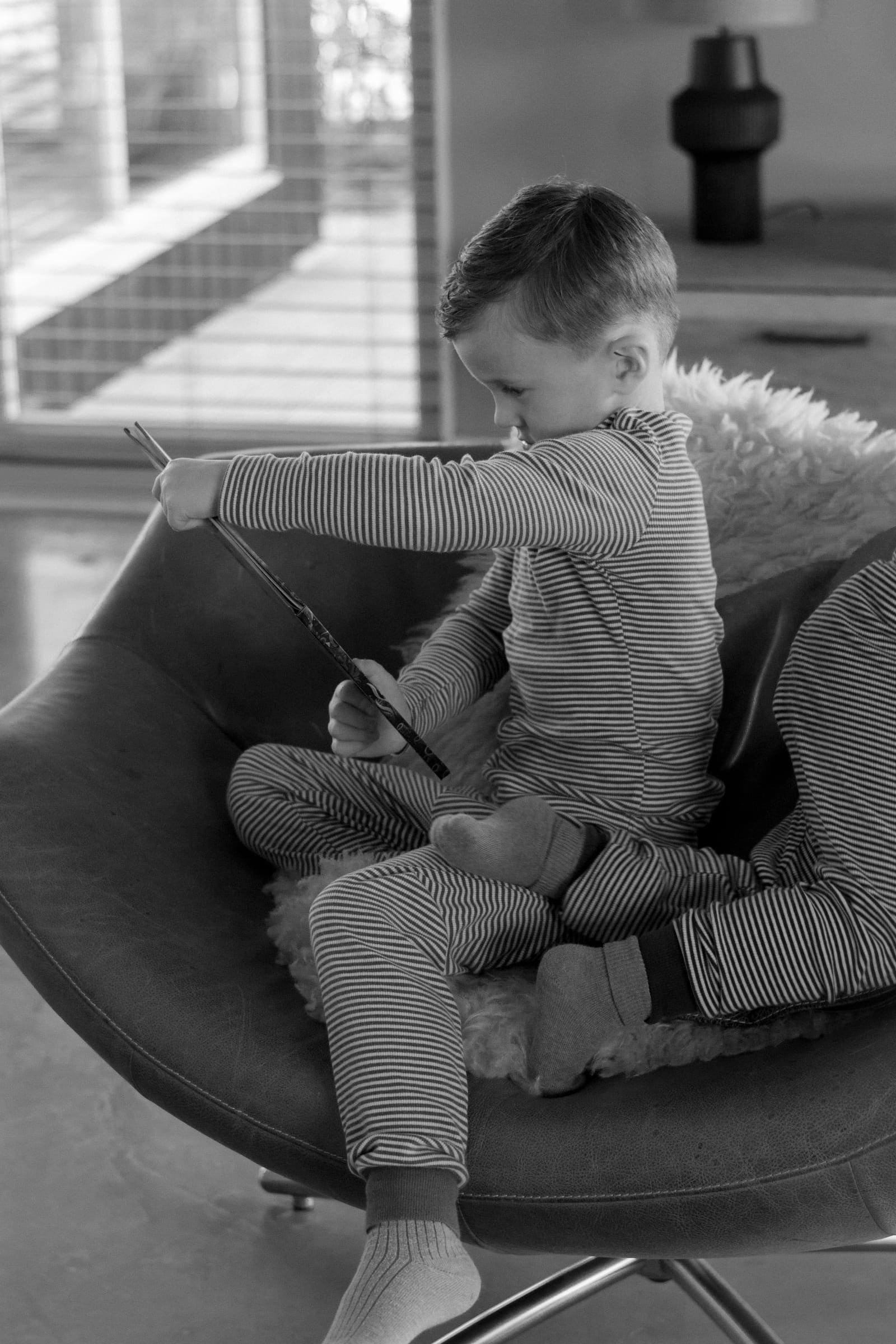
When we think about writing style, we often focus on what happens in the story. But in children’s books, how the text sounds is just as important as what it means. This is true for picture books and for chapter books, where kids “hear” the story in their heads as they read.
Research shows that children with a strong sense of rhythm also develop better reading skills. Writing with musicality and rhythm supports their reading journey. Rhythm gives your story a heartbeat.
The rule of three
“The rule of three” is a classic storytelling technique. Three repetitions, three events, or three adjectives create a natural, pleasing cadence.
- Don’t write: “The dragon was big, green, and very scary.”
- Instead: “He had scales as green as spinach, claws sharp as razors, and breath that smelled like rotten eggs.”
Alliteration and assonance
Playing with alliteration (repeating consonant sounds) and assonance (repeating vowel sounds) gives your sentences a gentle, inviting feel. It helps young readers with pronunciation and makes your story a joy to read aloud. Try a line like: “The daring dog dashed down the dark driveway.” It’s playful, rolls off the tongue, and sparks imagination.
Learning from the masters: style secrets from top children’s authors
To see how style works in practice, let’s look at three iconic children’s authors. Each writes for kids, but their voices are completely unique.
Annie M.G. Schmidt is known for her open, rhythmic, slightly rebellious style—short sentences, sharp dialogue, and surprising structure words that create trust and a sense of adventure. Jozua Douglas uses a cinematic, energetic style full of slapstick humor—fast action, strong contrasts, and visual exaggeration to keep kids engaged. Tosca Menten’s style is absurd, vivid, and rhythmic—her quirky characters and sound play make the impossible believable and invite laughter.
The lesson? Consistency is key. Douglas’s fast, visual style fits today’s trend: kids are more visually oriented, and the rise of graphic novels means stories need to be snappy and action-packed. Long, flowery descriptions give way to dynamic, punchy sentences.
A style guide for every age
One common mistake is using the same style for every age group. Children’s brains develop rapidly, and so do their preferences for language. Here’s a quick guide to adapting your style to your readers’ stage:
4 to 6 years: sound and sensory experience
At this age, it’s all about the auditory and sensory experience. Sentences should feel physical and rhythmic.
- Style tips: Use lots of onomatopoeia (sound words like whoosh, snap), repeat key words, and focus on the senses—how things feel, smell, or sound.
- Golden rule: Write for the reader’s voice. Make sure breath pauses fall naturally.
7 to 9 years: humor, action, and readability
Kids are learning to read on their own. The text should be inviting, energetic, and never overwhelming.
- Style tips: Use short sentences, active verbs, and plenty of white space. Avoid complicated passive constructions (“the ball was thrown by him” should be “he threw the ball”).
- Golden rule: Let humor drive the story. Visual jokes and a touch of absurdity keep kids turning pages.
10 to 12 years: voice, depth, and irony
Older readers are starting to understand complexity and relate to characters on a deeper level.
- Style tips: Use subtle humor, a hint of sarcasm, and richer inner dialogue. Sentences can be more complex, with room for metaphor and subtext.
- Golden rule: Give each character a unique voice in dialogue. Let them speak like real preteens—without forced slang that will sound dated in a few months.
Turning emotion into action
You’ve heard “show, don’t tell.” In children’s books, it’s even more important. Kids don’t want to be told a character is sad—they want to feel it through action. This shift toward more visual storytelling means text and illustration work hand in hand.
Translate emotion into vivid, concrete writing:
- Telling (flat and abstract): “Thomas was nervous about his presentation on spiders.”
- Showing (visual and sensory): “Thomas stared at the tiny spider in its plastic box. His palms were so sweaty the box almost slipped from his hands. A whole swarm of angry wasps buzzed in his stomach. When the teacher called his name, his tongue felt like a dry sponge.”
In the second example, the reader feels the tension. The wasps in the stomach and the dry sponge are metaphors that fit a child’s world—making your style vivid and memorable.
Five style mistakes publishers spot instantly
Many manuscripts are rejected in the first round. Editors can spot a beginner’s style within a few paragraphs. Want to look professional? Avoid these five pitfalls:
- Too many adjectives: Writers often over-describe. “The small, cute, fluffy bunny hopped through the beautiful, green, sunny forest.” This slows things down. Trust strong nouns and verbs.
- The “cutesy” trap: Too many diminutives (little chair, bookie, tiny step) make your text childish, not child-friendly. Use sparingly.
- Clichés and tired metaphors: Lines like “red as a tomato” or “crying like a wolf” don’t spark imagination. Find fresh comparisons.
- “Talking in the air”: Dialogue where characters only share info for the reader’s sake sounds fake. Let characters reveal personality, not just plot.
- Inconsistent perspective: Don’t jump from a child’s thoughts to a parent’s mid-scene. Stick to your chosen viewpoint.
The read-aloud test
There’s one ultimate test to see if your writing style is ready for the world, inspired by Tosca Menten’s approach: read it aloud—again and again.
After you write a chapter, sit at your desk and read it out loud—not in a whisper, but with the energy and intonation you’d use reading to a child at bedtime.
What should you listen for?
- Stumbling blocks: Where does your tongue trip up? That’s where your sentence structure is too complicated or the sounds clash.
- Out of breath: Do you need to gasp for air halfway through a sentence? It’s too long. Break it up. Shorter sentences add pace and tension.
- Rhythm loss: Does the text feel monotonous? Mix short and long sentences to create a natural cadence.
- Laugh test: Does the joke that seemed funny on paper actually land when spoken? Timing is everything—especially with humor.
Bring your unique story to life with Mr Tales
Finding your writing style is a journey of trial and error. It takes experimenting, editing, and lots of practice. But once your text is ready, the next challenge is turning those words into a real, tangible children’s book.
Traditional publishers have strict selection processes and high barriers, so many wonderful stories never make it to print. At Mr Tales, we believe the world is richer when more voices are heard—especially from those closest to children: parents, teachers, illustrators, and passionate creatives.
Whether you’re still working on your scenes or your manuscript is finished, the Mr Tales platform helps you move from idea to finished book with ease. Our intuitive writing and design tools give you full creative control. Smart writing and illustration assistance helps you break through creative blocks, and our professional layout modules make sure your text and illustrations come together beautifully.
When your book is ready, you can publish it with a single click and offer it through our print-on-demand service. Share your unique voice with your network and a wider audience—without big upfront investments. Make sure your story is read.
Frequently asked questions about writing style for children’s books
How strictly should I follow reading level guidelines when writing?
Reading levels are helpful for early readers, but don’t let them stifle your creativity. If you stick too rigidly to syllable counts and sentence length, your style can become stiff. Focus first on a flowing, rhythmic story. You can always simplify later for readability.
Can I use AI tools to improve my writing style?
Yes—if you use them wisely. AI tools are great for brainstorming, finding synonyms, or spotting overused words. On the Mr Tales platform, our technology is designed to support your creative process, not replace your unique human voice. Your personal touch and emotion are the soul of your book.
How can I make sure my dialogue sounds natural?
The best way is to listen to real kids. Notice how they build sentences, shorten words, and react. Write dialogue like you’re directing a play: let characters interrupt, ask questions, and use gestures (like a sigh or a shrug) to keep things lively.
Is it a problem if my writing style changes as I go?
This happens to almost every new writer. As you get to know your characters, your style will evolve. Don’t worry—write the story straight through. In editing, revisit earlier chapters to make the tone, rhythm, and word choice consistent with your stronger, later work.